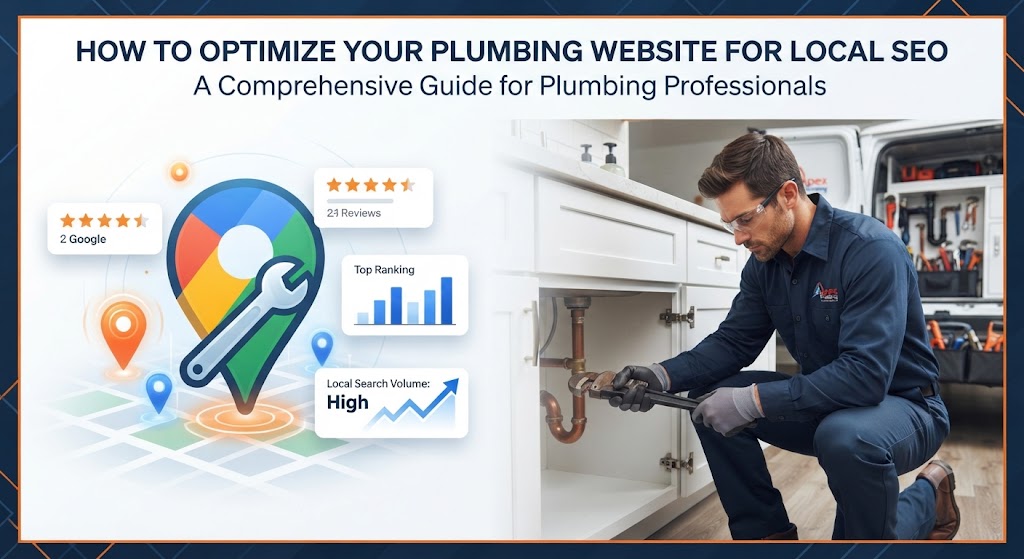

When a pipe bursts at midnight or a water heater gives out on a freezing Sunday morning, homeowners don’t flip through the Yellow Pages. They pull out their smartphones, open a search engine, and type in phrases like “emergency plumber near me” or “drain cleaning services in [City]”.
If your plumbing business isn’t appearing at the very top of those search results—specifically in the Google Local Map Pack and top organic rankings—you are handing high-paying jobs directly to your competitors.
Local Search Engine Optimization (SEO) bridges the gap between homeowners who desperately need help and your plumbing trucks out on the road. This comprehensive guide details how to transform your plumbing website into a 24/7 lead-generation machine.
1. Master and Optimize Your Google Business Profile (GBP)
For any local trade business, your Google Business Profile (GBP) is just as important—if not more important—than your actual website. When users search for local services, Google almost always prioritizes the Map Pack before showing organic search results.
- Claim and Verify: If you haven’t already, claim your profile, verify your address, and ensure your business name reflects your legal or DBA name without keyword stuffing (e.g., use “Apex Plumbing,” not “Apex Best Emergency Plumber Drain Cleaning”). ServiceTitan
- Precision Categories: Set your primary category to Plumber or Plumbing Contractor, and add relevant secondary categories like Water Heater Repair Service, Drain Cleaning Service, or Plumbing Supply Store if applicable.
- Maintain NAP Consistency: Ensure your Name, Address, and Phone Number (NAP) match your website footer, contact page, and every online directory down to the exact suite number and abbreviations. ServiceTitan
- Drive and Showcase Reviews: A steady stream of authentic five-star reviews is a primary ranking factor for the Map Pack. Implement an automated SMS or email follow-up sequence to request reviews from customers immediately after completing a job.
While you can manage many of these optimization steps yourself, partnering with experts who specialize in plumber SEO services can help you secure those top Map Pack spots much faster.
| GBP Element | Best Practice | Why It Matters |
|---|---|---|
| Primary Category | Plumber / Plumbing Contractor | Tells Google your core competency for top-matching map queries. |
| Service Areas | Add all specific cities and neighborhoods served | Expands your visibility to neighboring towns where you dispatch trucks. |
| Google Posts | Publish weekly updates, discounts, or seasonal tips | Keeps your profile active and signals high engagement to Google. |
2. Build a High-Intent Local Keyword Strategy
Generic keywords like “plumber” are too broad, extremely competitive, and rarely convert well. To capture high-value traffic, you need a mix of short-tail modifiers and hyper-local long-tail terms.
Causal Funnel
Categorizing Your Keywords
- Service + Location Keywords: “Water heater installation [City]”, “Sewer line repair in [Neighborhood]”.
- Emergency & Intent-Driven Keywords: “24/7 emergency plumber near me”, “Burst pipe fix [City]”.
- Problem-Based Keywords: Match the exact symptoms homeowners search for, such as “clogged drain solutions” or “low water pressure fixes”.
Incorporate these keywords naturally into your homepage hero section, meta titles, H1 headings, and dedicated service pages. Avoid unnatural keyword stuffing, which can trigger search engine penalties.
3. Structure Your Website with Dedicated Service and Location Pages
A common mistake plumbing companies make is cramming all their offerings onto a single homepage. Google rewards structured, comprehensive websites that clearly define what services are offered and where.
Essential Website Architecture
- Dedicated Service Pages: Create an individual page for each major service you provide—such as hydro jetting, leak detection, trenchless sewer repair, and sump pump installation. Each page should feature deep explanations, pricing transparency guides (if applicable), and clear calls to action (CTAs).
- Dedicated Location Pages: If your service area spans multiple cities or distinct neighborhoods, build individual location pages for each. Tailor these pages with local landmarks, unique neighborhood names, and localized customer testimonials to prove your local footprint. Gushwork
- Optimized Metadata: Keep your title tags between 50–60 characters (e.g., Emergency Plumber in [City] | Apex Plumbing) and write compelling meta descriptions under 120–160 characters that incorporate action verbs and a clear phone number or booking CTA. StrategyBeam
4. Deliver a Blazing-Fast, Mobile-First User Experience
The vast majority of emergency plumbing searches happen on smartphones by users standing in front of an active leak or overflowing toilet. If your website takes more than three seconds to load on a mobile device, users will bounce directly to a competitor.
StrategyBeam
- Responsive Design: Ensure your layout automatically adapts to any screen size, with text that is easy to read without zooming. StrategyBeam
- Click-to-Call Buttons: Feature a prominent, tap-to-call phone number in your header and sticky mobile navigation so frantic customers can reach you with a single tap.
- Speed Optimization: Compress all images, leverage next-gen formats like WebP, minify CSS and JavaScript files, and utilize reliable, high-performance web hosting. StrategyBeam
5. Implement Local Schema Markup and Technical SEO
Search engines rely on structured code to understand your business details instantly. Implementing Local Business Schema Markup provides explicit clues about your operating hours, geographical coordinates, service area, and accepted payment methods.
- Schema Integration: Use JSON-LD code to embed your NAP, geo-coordinates, and review aggregates into your site’s header. This increases your chances of earning rich snippets in search results.
- XML Sitemaps & Search Console: Register your site with Google Search Console and submit an updated XML sitemap to ensure crawlers index your new service and location pages quickly. Masum Billah Bhuiyan
- HTTPS Security: Secure your domain with an SSL certificate. Google penalizes non-secure sites, and homeowners will not trust an unsecured site with their credit card or contact details.
6. Create Local Content and Build Authority Through Citations & Backlinks
Content marketing and off-page SEO establish your brand as the leading authority in your local market.
Content Strategy
- Educational Blog Posts: Write helpful guides addressing seasonal challenges—such as “How to Prevent Frozen Pipes During a Hard Freeze” or “Spring Maintenance Checks for Your Sump Pump”.
- FAQ Sections: Address common customer questions directly on your service pages to capture valuable voice-search and featured snippet real estate.
Local Citations and Backlinks
- Directory Listings: Claim and clean up listings on reputable platforms like Yelp, Better Business Bureau (BBB), Angi, and HomeAdvisor. Keep your NAP data meticulously consistent across every directory. StrategyBeam
- Local Link Building: Partner with local real estate agents, hardware stores, or home inspectors for cross-promotions or guest blog posts. Sponsoring local little league teams or community charities can also secure high-value local
.eduor.orgbacklinks.
Conclusion
Optimizing your plumbing website for local SEO is not an overnight fix, but rather an ongoing investment that pays dividends in high-margin service calls. By locking down your Google Business Profile, targeting high-intent local keywords, structuring clean service and location pages, and maintaining a fast mobile experience, you position your company as the go-to plumbing expert in your community.
What is the biggest challenge your plumbing business currently faces when trying to rank in local search results?